What Are Crunchy Squishies?
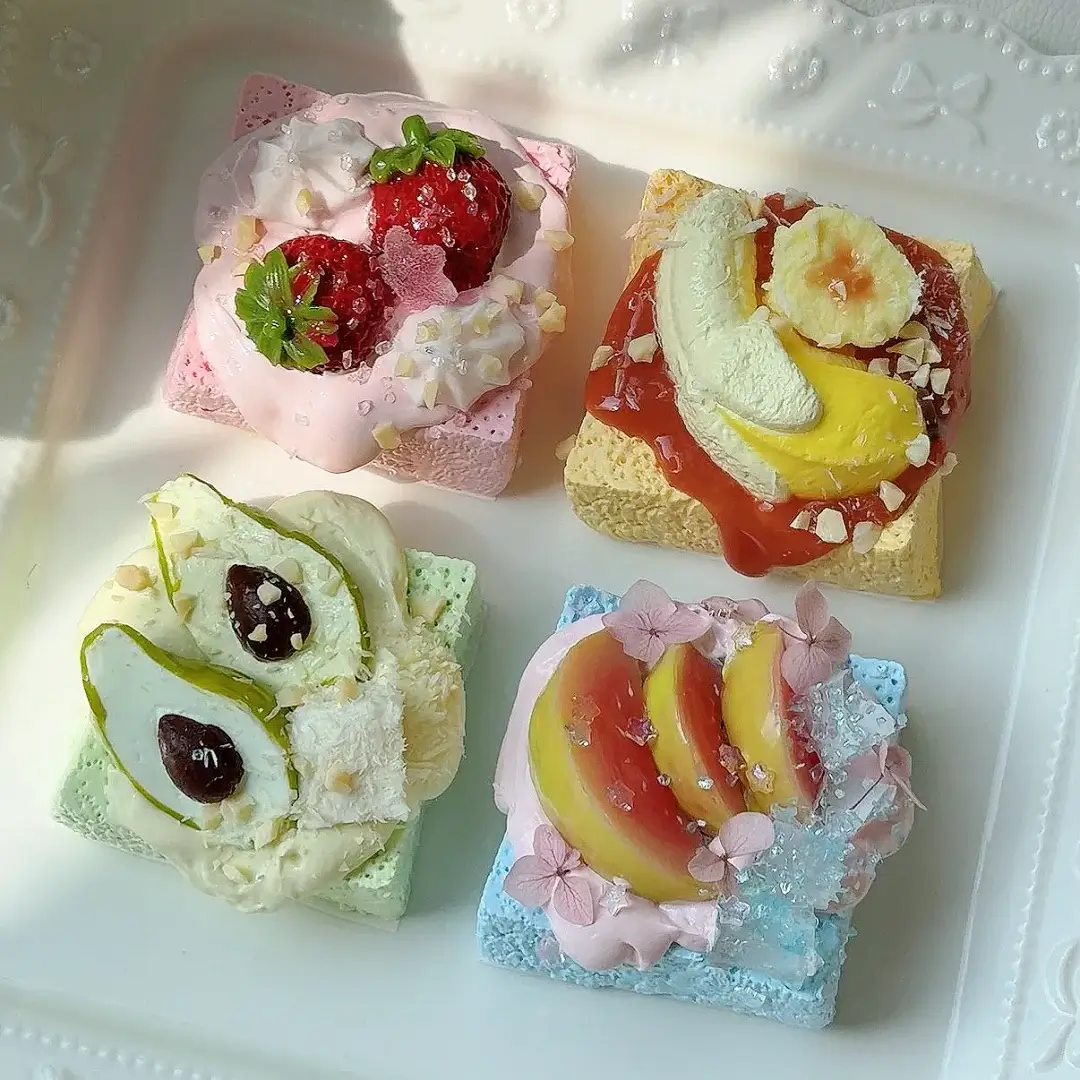
A crunchy squishy is built around sound as much as softness. A thin, brittle outer layer cracks under your fingers while the inside stays yielding, so one squeeze gives you two different sensations at once.
Anatomy of a crackly shell
Most crunchy designs use a thin wax-based or hardened coating over a softer body. Press gently and the shell fractures into fine hairline cracks; keep pressing and the soft core compresses underneath. The result is a dry, crisp sound rather than the quiet doughy give of plain foam.
Because the shell is the point, thickness matters. A very thick coating feels hard and breaks in large sheets; a thin one gives a finer, more even crackle. Listings that describe the shell as crackly, crispy or wax-coated are describing this layer.
How it compares with other textures
Slow rising foam returns to shape over several seconds and is almost silent. Mochi-style silicone springs back immediately with a smooth, cool surface. Moldable gel stays where you press it. Crunchy pieces sit apart from all three because the first squeeze is audible and the surface changes permanently as the shell breaks up.
That also means the feel evolves. Out of the package the crackle is at its loudest; after repeated squeezing the shell softens into a finer, quieter crumble. Collectors often describe this as the piece being broken in.
What to check in a listing
Look for a clear description of both layers, the finished size in centimetres or inches, and photos of the actual piece rather than a generic category image. Small minis are usually easier to crack evenly with one hand; larger shapes need more pressure.
Check the age grading and the seller's documentation if the toy is for a child. Squeeze toys are decorative collectibles, not teethers, and pieces with small detachable parts belong with older users. Care instructions matter too: heat and direct sun can deform the core long before the shell wears out.
Care after the first squeeze
Keep crunchy pieces away from hot cars, radiators and windowsills. Dust them with a soft dry brush instead of washing them, since water can cloud the coating and dull the crackle. Storing them in a box with a little space between pieces stops the shells from pressing together and fusing in warm weather.
If a piece arrives feeling softer than expected, a short rest somewhere cool usually firms the core back up. Avoid putting it in a freezer, which can make the shell too brittle and cause it to shed.
Frequently asked questions
Do crunchy squishies stay crunchy forever?
No. The shell breaks into finer fragments with use and the sound becomes quieter. That change is expected and is part of why many collectors keep one unopened for display.
Are crunchy squishies the same as slow rising ones?
No. Crunchy describes the outer shell and sound; slow rising describes how quickly the foam core returns to shape. A few designs combine both, but most are one or the other.
Can I wash a crunchy squishy?
Spot cleaning with a barely damp cloth is safer than soaking. Water and soap can cloud or dissolve a wax-based coating, so dry dusting is the routine method.
What are crunchy squishies made of?
Most designs use a thin wax-based or hardened coating over a softer body. Press gently and the shell fractures into fine hairline cracks while the soft core compresses underneath. The thickness of that outer layer decides whether the crackle is fine and even or breaks in large sheets.
What makes a crunchy squishy crunchy?
The sound comes from the brittle outer shell, not the core. Out of the package the crackle is at its loudest; after repeated squeezing the shell softens into a finer, quieter crumble that collectors call breaking the piece in. Water, heat and soaking can cloud the coating and dull the sound.
Keep exploring
Related collections and guides from the Joy Toys blog.
More in Texture & Materials
Shop Crunchy squishies
See the pieces behind this guide, with current prices and worldwide shipping.