Squishy Toy Buying Guide 2026: Types, Materials, Texture & Care
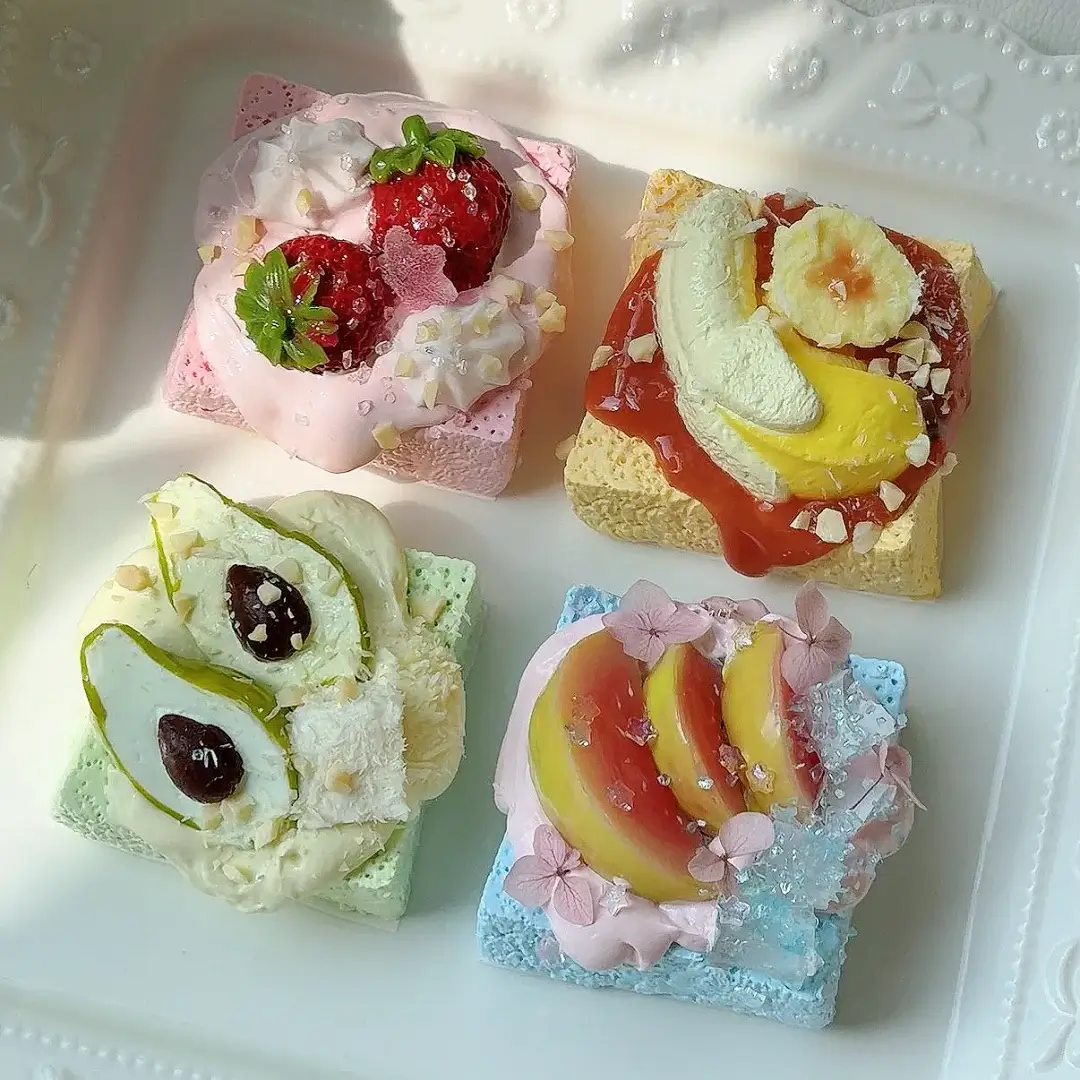
Not sure whether to start with a slow-rise toast or a fast-bounce mochi? This guide breaks down squishy types, materials and feel so you can pick the right one the first time.
Squishies took over desk drawers, backpacks and TikTok feeds for one simple reason: they are tactile, cute, and genuinely calming to squeeze. But "squishy" is an umbrella term covering very different feels. Before you buy, it helps to know what you are actually squeezing.
The main types of squishy toys
We sort our 168 designs into a few families. The split matters because it changes how the toy feels and how you use it.
- Slow-rise squishies — squeeze and they return to shape over several seconds. This is the classic "satisfying" feel and the most popular category in our shop. Food-style icons like Toast and Strawberry Cream are slow-rise favourites.
- Fast-rise / mochi squishies — springy and bouncy, they pop back almost instantly. Great for fidgeting.
- Stress balls & hand grips — denser, built for repeated squeezing; see our Stress Balls collection.
- Blind-box mini squishies — small, collectible, sold in mystery packs. Our Mini Squishy Mystery Packs is the gateway to the hobby.
In our own catalog, food and dessert themes make up the single largest group — roughly 57% of all designs are toast, cake, fruit or drink inspired. That is why a "Toast" or "Strawberry Cream" is usually a safe first pick.
Materials: silicone, PU foam & mochi
Most squishies are made from one of two materials:
| Material | Feel | Durability | Best for |
|---|---|---|---|
| Soft polyurethane (PU) foam | Slow, doughy, scented | Medium (can tear if over-stretched) | Display + gentle squeeze |
| Silicone (food-grade) | Springy, non-porous, washable | High | Kids, bags, repeated fidgeting |
| Mochi (TPR/elastic) | Bouncy, jelly-like | High | Fidget & play |
If you want something that survives a toddler, choose silicone pet-series silicone animals such as Bunny. If you want the slow, melt-in-your-hand feel, choose PU foam food icons.
How to choose the right one
- Decide the job. Desk stress relief? A slow-rise food squishy. Road-trip fidget? A mini mochi. Gift? A blind box.
- Check the size. Palm-sized (6–9 cm) suits bags and desks; larger 12 cm+ pieces are better for display.
- Smell test (via reviews). Scented PU foam is part of the charm but a minority of buyers dislike fragrance — read the listing notes.
- Start a theme. Food lovers do well collecting the Food Series; animal lovers gravitate to Pet Series.
Cleaning & care
- Silicone and TPR mochi pieces can be hand-washed with soap and water.
- Keep squishies out of hot cars — heat permanently softens and deforms PU foam.
- Store displayed pieces dust-free; a clear acrylic box keeps them cute and clean.
Safety by age
All our pieces are decorative collectibles. We recommend age 3+ for items without small detachable parts, and age 6+ for blind-box minis with smaller components. Supervise very young children, and never put a squishy in the mouth.
Frequently asked questions
Are squishies safe for kids?
Age 3+ for larger pieces without small parts, 6+ for blind-box minis. They are decorative collectibles, not teething toys.
Slow-rise or fast-rise — which is better?
Slow-rise gives the relaxing, melt-in-your-hand feel most people picture. Fast-rise/mochi is bouncier for fidgeting. Try one of each.
How do I clean a scented squishy?
Surface-clean with a damp cloth and mild soap; avoid soaking PU-foam pieces. Silicone and mochi types can be hand-washed.